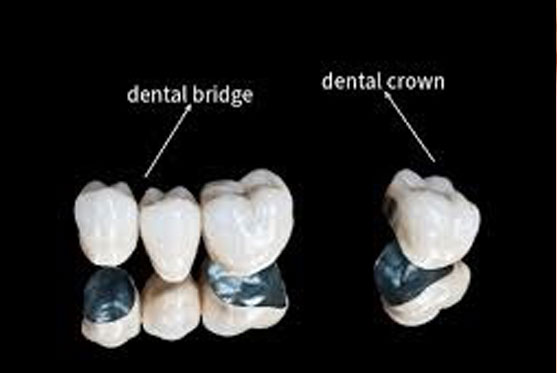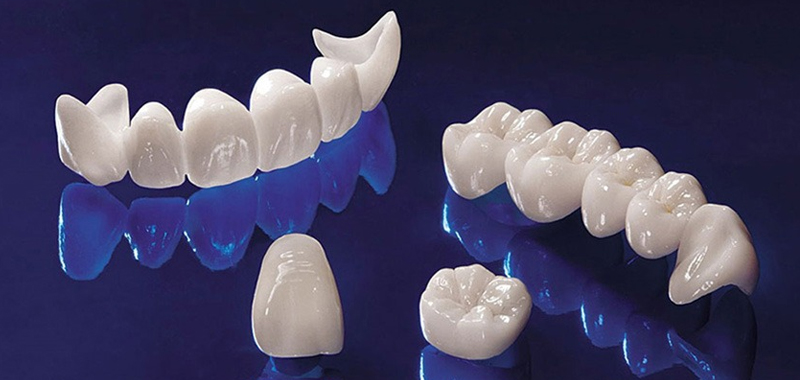
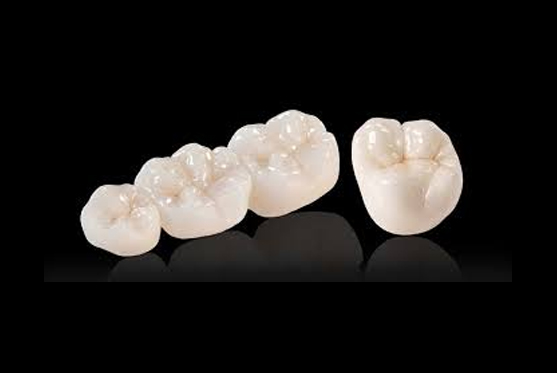
Dental Crown is usually called a cap is a custom-made, tooth-shaped covering that encases a damaged or decayed tooth. Crowns can be made from various materials such as porcelain, ceramic, metal alloys, or a combination (porcelain-fused-to-metal).
Severe Decay or
Damage: When a tooth is
extensively damaged due
to decay,
trauma, or a large filling, a crown can
restore its strength.
Post-Root Canal
Treatment: Crowns are commonly used after
root canal therapy
to
protect the weakened tooth structure.
Cosmetic Enhancements:
Crowns can improve the appearance of
discolored,
misshapen, or poorly aligned teeth.
Cracked Teeth: They help
hold together parts of cracked
teeth and prevent
further splitting.
Examination and Preparation:
The dentist examines the tooth, may
take
X-rays, and prepares the tooth by
removing a portion of the outer structure to
allow room for the crown.
In some cases, a build-up is required
to
strengthen the tooth.
Impression:
After tooth preparation, an impression
or
digital scan of the tooth is taken
to
create a custom crown that fits
precisely.
A temporary crown may be placed to
protect
the tooth until the permanent
crown
is ready.
Crown Fabrication:
The dental laboratory creates the
custom
crown based on the impression. This
process usually takes one to two weeks.
Fitting and Cementation:
Once the custom crown is ready, the
dentist removes the temporary crown,
checks
the fit and appearance, then permanently
cements the crown in place.
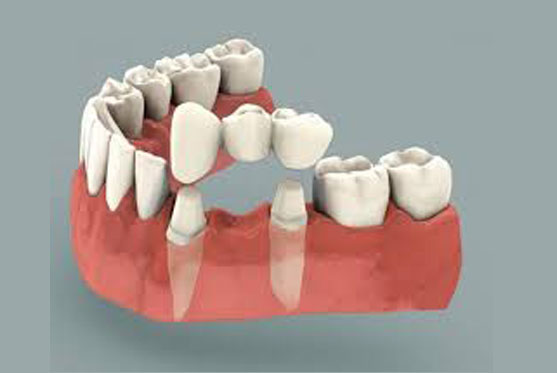
Dental Bridge is a fixed prosthetic appliance used to replace one or more missing teeth by “bridging” the gap. Bridges are anchored in place by crowns placed on the adjacent healthy teeth, known as abutment teeth.
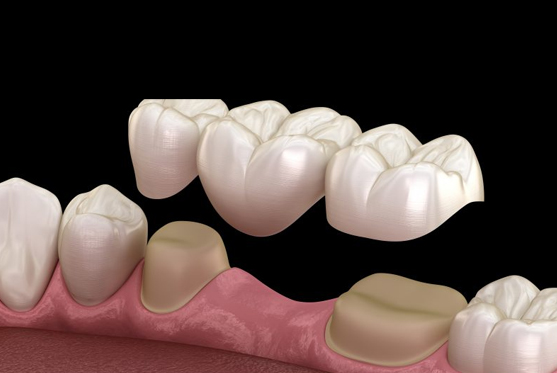
Single or Multiple
Missing
Teeth: Bridges are an ideal solution
when one or more
adjacent teeth are missing.
Maintaining Facial
Structure: They help
prevent the face from sagging or
looking
sunken due to missing teeth.
Restoring Chewing
Function: Bridges can
restore the balance of the bite by
replacing the gap left by missing teeth.
Preventing Tooth
Movement: Missing teeth
can cause neighboring teeth to
shift
out of position; a bridge can stop this
movement.
Initial Consultation
and Treatment
Planning:
The dentist performs a comprehensive
evaluation, including X-rays and
impressions.
The condition of the abutment teeth is
assessed and may require preparatory
work.
Tooth Preparation:
The abutment teeth on either side of the
gap are reshaped to accommodate
crowns
that will anchor the bridge.
Impression and Temporary
Bridge:
Impressions or digital scans of the teeth
are taken.
A temporary bridge may be placed to
protect the site while the custom bridge
is
fabricated.
Fabrication of the Custom Bridge:
The dental lab constructs the bridge,
which includes artificial teeth
(pontics)
attached to crowns that will fit over
the abutment teeth.
Fitting and Cementation:
After a precise fit and color match are
confirmed, the dentist cements the
permanent bridge in place.